

Selling a home with solar panels is possible, but the lease needs to be resolved before closing. Usually, the purchaser takes over the solar lease with the solar company's approval, or you purchase the system under the contract's purchase terms.
The leased solar panels don't automatically become the purchaser's property when you hand over the keys. We recommend starting with the solar agreement, before you list the house or accept an offer.
Key Takeaways
- Selling the house doesn't automatically transfer the solar lease or release you from payments.
- A lease transfer requires the purchaser's agreement and the solar company's approval. A financed buyer also needs lender approval.
- Purchasing the system can simplify the sale, but it reduces your proceeds unless the price increase covers the expense.
- Disclose the lease upfront, and put responsibility for every solar-related cost in the purchase agreement.
What Transfers When You Sell a House With Leased Solar?
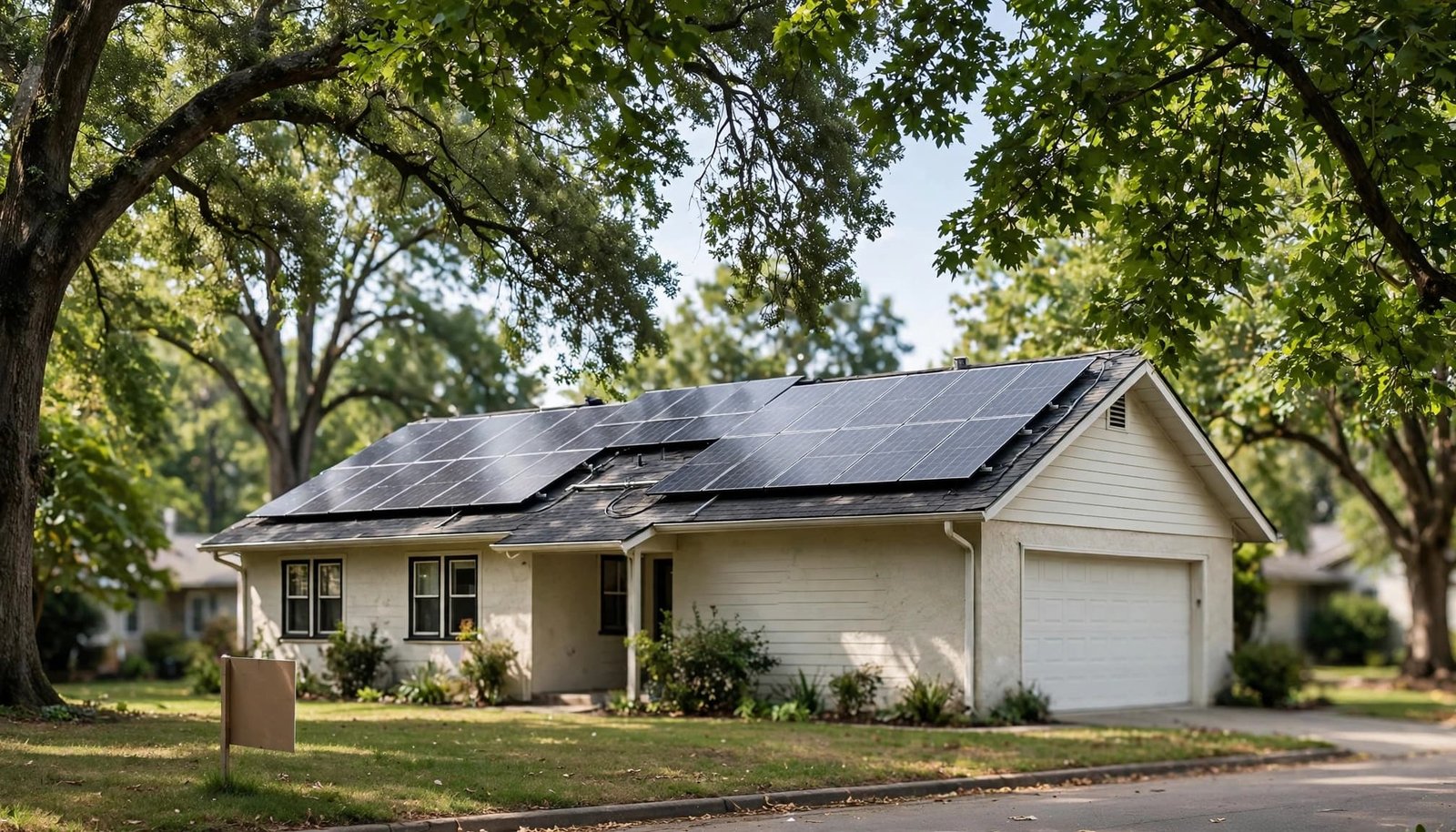
The Solar Company Still Owns the Equipment
A solar lease is a long-term agreement to use equipment owned by someone else. Selling your house doesn't change that ownership.
The solar company generally receives available ownership-based tax benefits and incentives. Leasing doesn't give you those benefits simply because the panels sit on your roof. The IRS explains the ownership requirement in its home energy credit guidance.
A power purchase agreement, or PPA, is different. You generally pay for the electricity produced rather than renting the equipment. Both arrangements create obligations separate from your mortgage.
The Buyer Must Accept the Contract
A purchaser taking over the lease accepts its remaining payments, annual increases, access rights and other conditions.
They aren't buying free electricity. They may still receive a utility bill alongside the solar payment.
We recommend presenting the remaining payment schedule and actual electricity records together. A payment figure alone doesn't show whether the agreement offers value.
Lease Transfer or Buyout: Compare the Costs
The right choice depends on your contract, the purchaser's financing and what each route leaves after closing.
| Issue | Transfer the Lease | Buy the System |
|---|---|---|
| Main benefit | Avoids purchasing the equipment | Removes the buyer's lease obligation |
| Main drawback | Buyer and provider approval required | Purchase cost reduces your proceeds |
| Buyer obligation | Takes over remaining contract terms | Receives owned equipment if purchase is completed |
| Seller expenses | Possible transfer charges or concessions | Purchase price and applicable charges |
| Main risk | Buyer declines or fails approval | Added home value doesn't cover the cost |
A transfer protects your cash only when the purchaser accepts the terms. Buying the system makes sense only when its benefit justifies its cost.
Compare Net Proceeds, Not Asking Prices
Use this calculation: expected sale proceeds after a buyout, minus the purchase quote, fees and other selling costs.
Compare that result with transferring the lease, including any price reduction or credit the buyer requests. An increased listing price isn't money received. The final sale price and appraisal still matter.
Separate Ownership From Prepaid Payments
Ask for a written quote that lists the buyout cost and says exactly what you receive. Prepaying the remaining lease payments may leave the solar company owning the equipment.
To own the equipment, buy out the system rather than prepaying only the remaining lease payments. Purchasing the system, prepaying the lease and terminating the agreement are different transactions. Early termination charges can make an exit expensive. Don't spend money based on a verbal description of a "payoff."
Start the Solar Paperwork Before Listing
We recommend treating solar approval as a separate part of the sale, with its own paperwork and conditions. Transfer approval and paperwork can affect the home sale process, so start early and choose a closing date that allows time for each review.
- Before listing, request the transfer packet and purchase quote. Get the remaining term, payment schedule, transfer requirements, purchase eligibility, charges, and quote expiration date. Give these to your real estate agent and closing professional.
- When reviewing offers, settle who handles the lease. The purchase agreement should say whether the purchaser assumes it or you purchase the equipment. Include who pays related charges and what happens if approval fails.
- After acceptance, submit the purchaser's application. The solar company handles its approval process. The purchaser sends the agreement to their mortgage lender, while the title company reviews recorded solar documents.
- Before closing, finish the transfer or purchase. The closing professional accounts for agreed charges. Obtain written confirmation of the effective transfer and your release, or documentation that ownership has transferred after purchase.
A provider's application approval isn't the same as a completed transfer. Signed documents and the closing conditions still matter.
There isn't a universal approval deadline. A credit review may finish before the lender or title review does. Build the sale around the complete process, not the fastest advertised step.
How Leased Panels Affect the Buyer's Mortgage
A purchaser can qualify for your house and still have trouble qualifying with the solar payment included.
Lease Payments Can Reduce Borrowing Power
Under Fannie Mae's rules, the monthly lease payment generally counts in the buyer's debt-to-income ratio. That ratio compares required monthly debt payments with income.
The exception requires more than a general performance promise. The lease must provide a stated amount of energy for a fixed payment and prorated compensation when production falls short.
Fannie Mae's solar financing policy clarification explains why lenders distinguish leases, PPAs and financed equipment.
Solar-company credit approval doesn't replace mortgage approval. A buyer can pass one review and fail the other.
Leased Equipment Doesn't Add Appraised Value
Fannie Mae's 2016 Selling Guide addresses third-party solar ownership. Leased panels don't add property value and aren't included in the property's appraised value.
The bank therefore doesn't increase its collateral value because someone else's equipment is attached to your roof.
The lender also reviews responsibility for equipment-related damage and removal. The title company reviews any recorded solar notice or UCC filing. Those documents need review, but a filing shouldn't automatically be described as a mortgage against the house.
Disclose the Lease and Send the Documents
Say "leased solar" in the MLS listing and required disclosures. Don't describe the house as having "included solar" without explaining the separate agreement.
Buyers may otherwise assume the purchase price includes owned panels. Late disclosure can trigger renegotiation, cancellation disputes or claims that material information was withheld.
The Department of Energy's guidance on solar information in home listings supports giving buyers clear system information early.
Prepare a document packet covering these items:
- Include the signed solar agreement, amendments, payment schedule and current account statement.
- Provide transfer instructions, any purchase quote and the applicable fees.
- Send production records, utility bills and available equipment, installation and roof-related warranties.
- Include known leaks, service disputes, unpaid balances and recorded solar documents.
A solar panel warranty has limited value if it isn't transferable or the transferable warranty excludes the purchaser's concern.
Give the packet to the purchaser, their mortgage lender and the listing agent.
Some states use a Seller Property Questionnaire or similar form. Whether late disclosure permits cancellation or return of a deposit depends on state law and the contract. Have a local real estate attorney explain those rights. An attorney can also advise whether the facts and contract create legal exposure, including exposure to a lawsuit.
Read the Payment Increases Alongside Production
A solar lease can become less attractive when payments rise while electricity production gradually declines.
The contract's escalator sets future payment increases. The production guarantee sets the provider's responsibility if output falls below the promised level. Those provisions need to be read together.
We recommend comparing the full remaining payment schedule with actual production, utility charges and service history. Claimed savings at installation don't establish savings for the next owner.
Roof condition matters too. A roof replacement may require removing and reinstalling the panels, and the agreement determines who arranges that work and pays.
Don't promise that the lease covers every repair. Send the warranty and service terms so the future owner can see the limits before signing.
Can a Cash Buyer Take Over the Solar Lease?
Sometimes, if the agreement permits it and the solar company approves the purchaser. Cash removes mortgage underwriting, but leased solar panels still come with a lease obligation.
At Who Buys Houses Fast, we review homes for a direct purchase or connect sellers with a vetted local cash buyer. Send the solar agreement with the property details so the obligation can be considered in the offer.
Our cash home-selling process explains who handles each part. You choose your preferred closing date, and we work to your timeline. Unresolved solar approval can affect what is possible.
The trade-off is straightforward. A cash offer is usually below full retail market value in exchange for speed, greater certainty and no repairs, showings or agent commissions.
If your house is marketable and you have time, listing may leave you with more. Compare the money left after the solar obligation, rather than comparing offer prices alone.
Frequently Asked Questions About Solar Leases and Selling
What Happens if the Sale Falls Through?
You generally remain responsible for the lease unless the solar company has formally released you.
Tell the provider when the purchase contract ends. A transfer approval for one buyer doesn't automatically apply to the next buyer.
A completed equipment purchase may remain in place even if the home sale fails. That is a reason to coordinate payment and ownership documents with closing.
Does the Buyer Need a Credit Check?
Often, yes. The solar company applies its own qualification standards, separately from the mortgage lender.
Credit score requirements and available alternatives depend on the actual agreement. Submit the purchaser's application under that agreement before treating the transfer as settled.
What if the Panels Are Owned or Financed Instead?
Owned panels can be included in the home sale without a third-party lease transfer.
Financed panels need a separate loan and title review. The balance may need payment at closing, depending on the financing documents. Owning the equipment doesn't necessarily mean it is debt-free.
Resolve the Solar Agreement Before Committing to a Sale
Leased panels don't automatically block a sale. The buyer needs an approved transfer, or the agreement needs another permitted resolution.
We recommend comparing net proceeds and putting every responsibility in writing before committing to a buyout or accepting an offer.
If you want to compare an as-is sale, Get My Cash Offer. There is no obligation, and you can include the solar agreement so the offer accounts for it.