
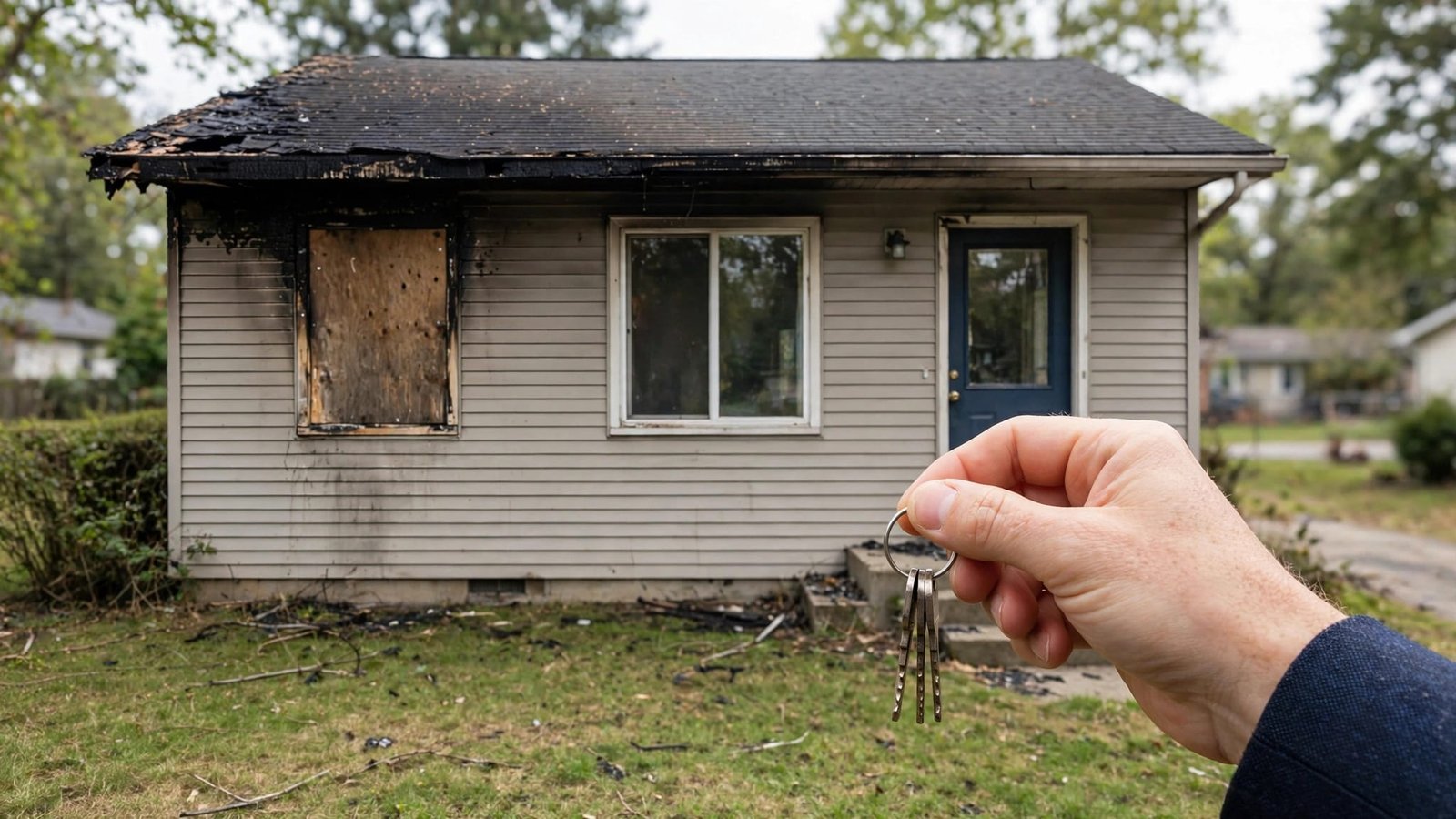
Yes, you can sell a fire damaged house after fire damage without completing repairs. An as-is sale can avoid the cost and work of rebuilding, but expect a cash offer below full retail value.
Before choosing to sell fire-damaged house, repair it, or sell the lot, start with safety and insurance. A pending claim, mortgage payoff, or city notice can change what you keep from the sale.
Get those facts together before choosing between repairs, an as-is sale, and selling the lot.
Key Takeaways
- Selling as-is lets you skip repairs, but it usually doesn't remove your duty to disclose known material problems.
- Insurance proceeds and sale proceeds are separate. Selling may affect money withheld until rebuilding is complete.
- Compare what you would keep after each option's costs, rather than comparing a cash offer with a renovated asking price.
Step 1: Assess the Damage Safely
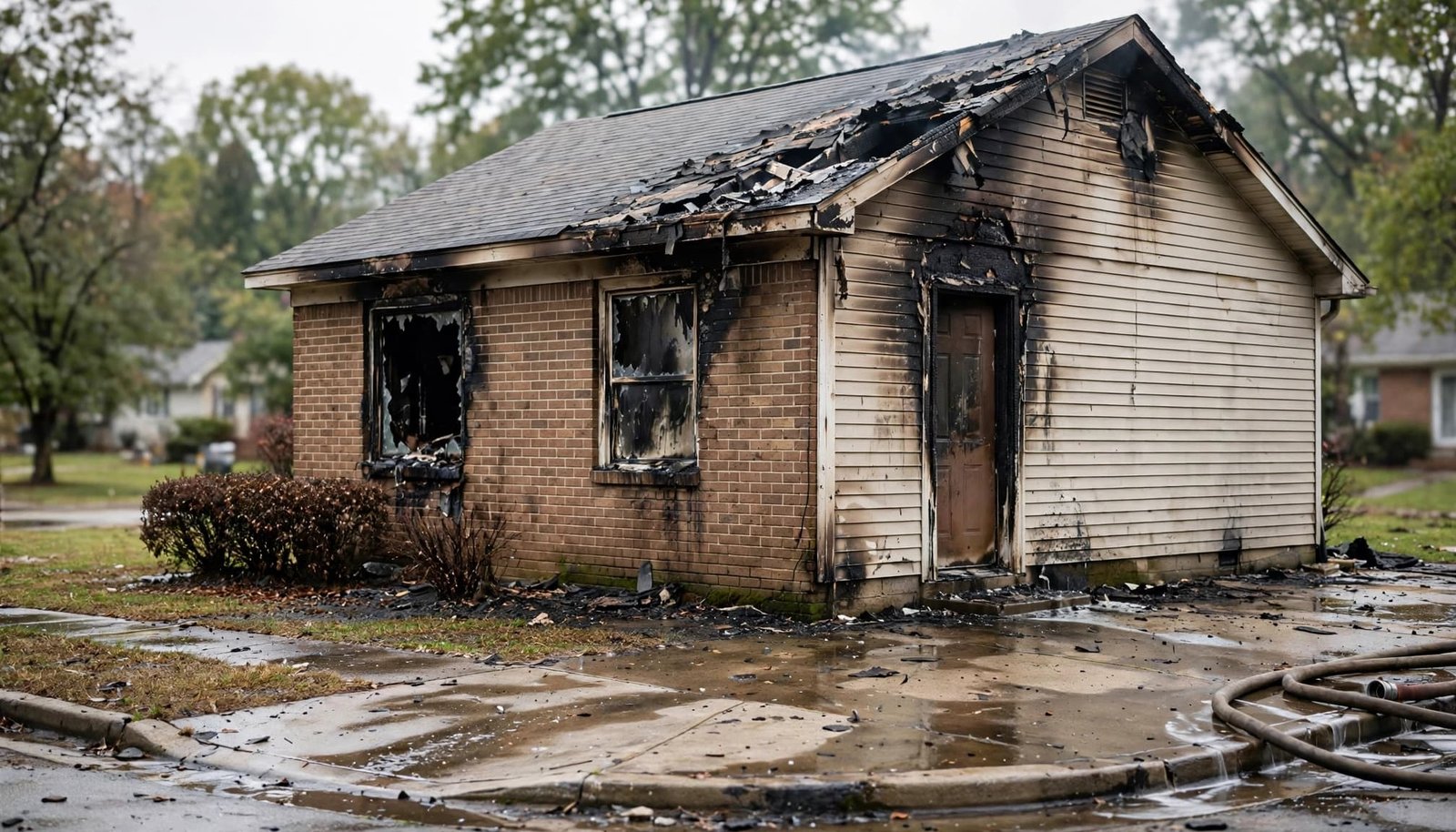
Get Clearance Before Entering
Don't enter a fire-damaged home or bring buyers inside until the fire department says access is safe. The U.S. Fire Administration's guidance after a home fire warns that floors and walls may be less stable than they appear.
Have the fire department or utility provider handle gas and electricity shutoffs. Don't reconnect damaged systems yourself. Restricted access may also be necessary until a building official or structural engineer evaluates the house.
Keep people out of unsafe areas, including anyone offering to buy.
Separate Smoke Damage From Structural Damage
Request the fire department report and a written assessment from a qualified restoration contractor. Bring in a structural engineer when framing, roof supports, or the foundation may be affected.
The assessment should identify fire damage and distinguish soot and odor cleanup from repairs to damaged wiring, insulation, roofing, and structural components. Smoke can reach rooms that never burned. Odor treatment alone doesn't establish that the house is safe.
Firefighting water also matters. Wet cavities and flooring can develop mold and wood rot. FEMA's disaster mold cleanup guidance explains why drying and moisture removal belong in the recovery plan.
Step 2: Understand Insurance Before Signing

Know What the Policy Pays
Review your homeowners insurance policy before agreeing to sell. Homeowners insurance commonly covers fire, but policy terms, deductibles, limits, exclusions, and claim conditions control payment.
Replacement cost coverage generally pays repair or rebuilding costs without deducting depreciation, subject to policy terms. Actual cash value coverage deducts depreciation for age and condition. The NAIC's post-disaster claims guide explains that distinction.
Coverage for defective equipment or maintenance is different from coverage for a resulting fire. Don't assume an old electrical system automatically makes the entire fire loss excluded.
Dwelling coverage generally excludes land. The land usually retains value after the structure burns, although contamination, debris, access, or neighborhood conditions can affect its market value.
Coordinate an Open Claim With the Sale
An open claim doesn't automatically prevent a sale. It does require clear paperwork.
Some replacement-cost policies pay an initial replacement cost amount based on actual cash value, then release additional replacement cost funds after qualifying repairs or replacement. Selling as-is may affect that additional recovery. Your mortgage lender may also appear on a payment check.
Ask the adjuster for a written breakdown of payments issued, amounts withheld, and conditions attached. Give that information to the closing attorney or title company before signing.
The purchase agreement should address any intended transfer of claim rights or proceeds. Don't assume the claim transfers with the deed.
Step 3: Price the House From Documented Costs
Start With After-Repair Value
The after-repair value, or ARV, is an estimate of what the home could sell for after appropriate restoration. Base it on nearby completed sales of comparable homes, not optimistic asking prices.
A buyer then subtracts repairs, permits, holding expenses, resale costs, and compensation for taking the project risk. Investor percentage formulas are shortcuts, not appraisals or rules every buyer follows.
We recommend sharing any existing engineer's report or contractor bid. A defined repair scope gives buyers less reason to estimate every unknown cautiously.
Compare What You Would Keep
Ask for an itemized estimate of repairs and restoration, including demolition, drying, smoke treatment, reconstruction, permits, code corrections, and disposal. Smoke remediation may involve soot removal, HEPA filtration, cleaning salvageable materials, and replacing materials that cannot be cleaned.
Include a contingency for damage uncovered after walls open. A full California rebuild and a limited smoke-cleaning project need very different budgets; a broad per-square-foot figure won't price both.
Compare these calculations:
- For a repaired sale, subtract restoration, contingency, financing, holding costs, negotiated commissions, closing costs, and mortgage payoff from the likely sale price.
- For an as-is sale, subtract your assigned closing expenses, liens, and mortgage payoff from the written offer.
Keep insurance money separate unless you know it remains payable under that option. Otherwise, you may count money you won't receive.
Step 4: Prepare Records and Disclosures
Photograph the damage when access is safe. Make an inventory of damaged belongings, save receipts, and keep a record of insurance calls and emails.
Gather the fire report, contractor bids, engineering findings, inspection reports, permits, safety inspections, and city notices. Give buyers the same description of what happened and what remains unresolved.
In most states, an as-is contract doesn't erase duties to disclose known material defects. Repairs don't automatically remove disclosure obligations either. We recommend disclosing the fire history and providing repair records rather than assuming finished walls settle the issue.
Requirements, exemptions, and liability periods vary by state. Have a local real estate attorney confirm what applies to your transaction. This is general information, not legal advice.
Don't spend money on cosmetic preparation before comparing offers. Necessary safety and loss-prevention work are different. Coordinate those tasks with the insurer, and preserve documentation before damaged materials are removed.
Compare Selling As-Is, Repairing, and Demolishing
Each route solves a different problem.
| Option | When It May Fit | Main Trade-Off |
|---|---|---|
| Sell as-is | You want to avoid managing restoration | The price reflects damage and buyer risk |
| Repair, then list | You can fund the work and the added proceeds justify it | You carry construction costs and delays |
| Demolish, then sell | The structure has little usable value | Demolition and site costs reduce proceeds |
You can also sell as-is through a realtor, rather than only to a direct cash buyer. A listing can reach real estate investors, although showings, negotiations, and commissions may remain.
Repairing can make sense when damage is limited and the expected price increase exceeds every added expense. Restoration can add weeks or months before listing. Buyers may still want reports and warranties because they worry about hidden damage.
Agent commission is negotiable. Use the proposed agreement's actual charges in your comparison, rather than assuming a standard rate.
Demolition may fit a fire damaged house with little usable value. It usually requires local permits and may require hazardous-material handling. Obtain a written quote covering utility disconnection, debris disposal, and site work. If you pay before listing, that expense reduces your net proceeds; if the buyer handles it, expect the offer to reflect it.
Our guide to ways to sell a house quickly compares sale routes beyond damaged properties.
Understand What Can Delay an As-Is Closing
Cash removes the buyer's mortgage approval process. It doesn't remove title issues, liens, ownership disputes, or unresolved claim arrangements.
For financed buyers, damaged roofs, unsafe wiring, and structural problems can trigger repair requirements. Insurance availability can also affect loan approval. Some renovation financing may work, but the loan program and property condition matter.
A licensed title company or closing attorney handles our closings. They review ownership, obtain payoffs, and account for charges on the settlement statement. Tell them about claim proceeds and lender-controlled insurance checks early.
At Who Buys Houses Fast, we review the property directly or through a vetted local cash buyer in our network of cash home buyers. Our cash home-selling process explains what happens after you send the details.
We buy houses as-is, with no repairs, public showings, or agent commissions on a direct sale. The price is usually below full retail value in exchange for those trade-offs. Review inspection rights, cancellation terms, and who pays each closing cost before accepting.
You pick the closing date, and we work to your timeline. Title or claim problems can affect what date is possible.
Questions About Selling a Fire-Damaged House
Can a House Be Sold Without Any Repairs?
Usually, yes. A buyer can purchase the property in its current condition. However, an unsafe-building order or other municipal requirement may affect access, transfer, or what must happen next.
Send any notices with the property details. An as-is contract doesn't cancel a government order.
Does Insurance Cover the Full Rebuilding Cost?
Not always. Deductibles, limits, exclusions, code-upgrade coverage, and replacement-cost conditions can leave a gap. Insurance also doesn't necessarily compensate you for every change in resale value.
The NAIC explains how adjusters evaluate damage and policy payment in its wildfire insurance claim guidance.
Should Insurance Stay in Place Until Closing?
Yes, keep appropriate coverage through closing. Tell the insurer the house is fire-damaged or vacant so the policy reflects its condition.
That doesn't mean keeping unsafe utilities running. Follow the fire department's and utility provider's directions. Don't restore service for a walkthrough.
Choose Based on Net Proceeds and Repair Risk
Choosing to sell as-is can be sensible when you want to avoid funding and managing restoration. Repairing may leave you with more money when the added sale price covers the full cost and risk.
We recommend comparing a written cash offer with a realistic repair-and-list estimate after accounting for closing costs and repair expenses. The amount you keep matters more than the headline price.
If you want an as-is number, Get My Cash Offer. The offer is free and carries no obligation to accept.