
The short answer: the fastest way to sell a house is a direct sale to a cash buyer or an iBuyer, which can close in one to three weeks with no showings or repairs. The fastest way that still gets close to full market value is pricing the house at or just under recent comparable sales and listing it on the MLS. Which one is right depends on three numbers you can work out today: what you owe, what the house is worth as it sits, and what every extra month of owning it costs you.
Most guides on this topic stop at "price it right, declutter, take good photos." That advice is correct, and it is summarized below. But the questions sellers actually ask in forums and video comments are harder: What if the offers do not cover my mortgage? I already missed payments, now what? Should I borrow money to fix the roof? How do I stop a buyer from renegotiating a week before closing? This guide answers those directly.
Your realistic options, compared side by side
There are five ways people sell quickly. They trade speed against price in different ways, and they fail in different ways.
| Option | Typical time to close | What you give up | Best fit |
|---|---|---|---|
| List with an agent, priced to sell | About a month on market (NAR reported a median of 33 days in September 2026), then a loan closing, often scheduled 30 to 45 days out | Commission, prep work, showings, the risk the buyer's loan or appraisal falls through | House in decent shape, at least two to three months of runway |
| List as-is with an agent | Similar to above, often a bit longer | Lower price than a repaired house, inspection renegotiation risk, commission | Cosmetic or moderate issues, some runway |
| Sell it yourself (FSBO or flat-fee MLS) | Same market timeline as listing | Your time, pricing risk, handling negotiations and paperwork yourself | Sellers who know their local market and can handle a contract |
| iBuyer (online instant offer) | Offer in a day or two, closing usually three weeks or more out, often on a date you pick | Service fee plus repair deductions after the inspection; only certain homes and cities qualify | Newer, standard homes in large metros |
| Local cash buyer or investor | Often one to three weeks; title work sets the floor | The biggest price discount, plus contract risk if you do not read it carefully | Heavy repairs, inherited or vacant houses, tenants, hard deadlines |
A sixth path is worth knowing about: get a cash offer first, then list anyway. The cash number becomes your floor. If the open market beats it by enough to justify the wait, you list. If it does not, you already have an exit. Some brokerages package this as a program, but you can do it yourself by collecting one or two written cash offers before you sign a listing agreement.
Before you choose: work out your walk-away number
Most selling guides skip this step, yet it decides which options you can actually use. Your walk-away number is the lowest sale price that lets you close without bringing money to the table.
- Ask your lender for a written payoff statement, dated near your expected closing. The payoff is not the balance on your monthly statement. It includes interest through the payoff date and any late fees or charges, so it is usually higher.
- Add every other lien: home equity loans or lines of credit, unpaid property taxes, HOA balances, judgments, and any mechanic's liens. A title company will find these anyway; finding them first means no surprises.
- Add the selling costs of the path you are considering: commissions if you list, the service fee if you use an iBuyer, and your share of closing costs, transfer taxes and title fees.
- Add the cost of waiting: mortgage, taxes, insurance, utilities and upkeep for each month the house is still yours.
Payoff plus liens plus selling costs plus holding costs equals your walk-away number. If a realistic offer clears it, you are choosing between options on price and speed. If no realistic offer clears it, speed is not your main problem: you are looking at bringing cash to closing, asking the lender for a short sale (which adds the lender's approval time), or keeping the house longer through a loan workout or renting it out.
A seller on Reddit asked what happens if they list low and the bids do not cover what they need. The walk-away number is the answer. You never have to accept an offer below it, and you can set your list price knowing exactly how much room you have.
Already behind on mortgage payments? Call your servicer before you call a buyer
Selling fast can be the right move when payments are slipping, but it should not be the first call. Federal mortgage servicing rules give you more time and more options than most people realize.
- Foreclosure usually cannot start right away. Under the federal Regulation X rule, a servicer generally cannot make the first notice or filing for foreclosure until the loan is more than 120 days delinquent (12 CFR 1024.41(f)). There are exceptions, but for most borrowers a couple of missed payments is not a foreclosure yet.
- A complete loss mitigation application protects you. If the servicer receives a complete application more than 37 days before a scheduled foreclosure sale, it must evaluate you for every option it offers, and it generally cannot move ahead with the sale while that review is pending (same rule, sections (c) and (g)).
- Ask about forbearance, a repayment plan and a loan modification by name. These are standard options, not favors, and which ones you qualify for depends on your loan type and the reason for the hardship.
- Talk to a free housing counselor. HUD-approved counselors help homeowners compare these options at no cost. The CFPB keeps a search tool for counselors near you.
If you still decide to sell, the work you did is not wasted: the servicer review buys you time to sell on your terms instead of a deadline, and you will know your exact payoff. Be cautious of anyone who contacts you because they saw a default notice and pushes you to sign quickly.
Should you borrow money for a repair you cannot afford, or sell as-is?
A common version of this question: the house needs one or two big items, like a roof or a sewer line, and the only way to pay for them is a home equity loan. Here is how to decide.
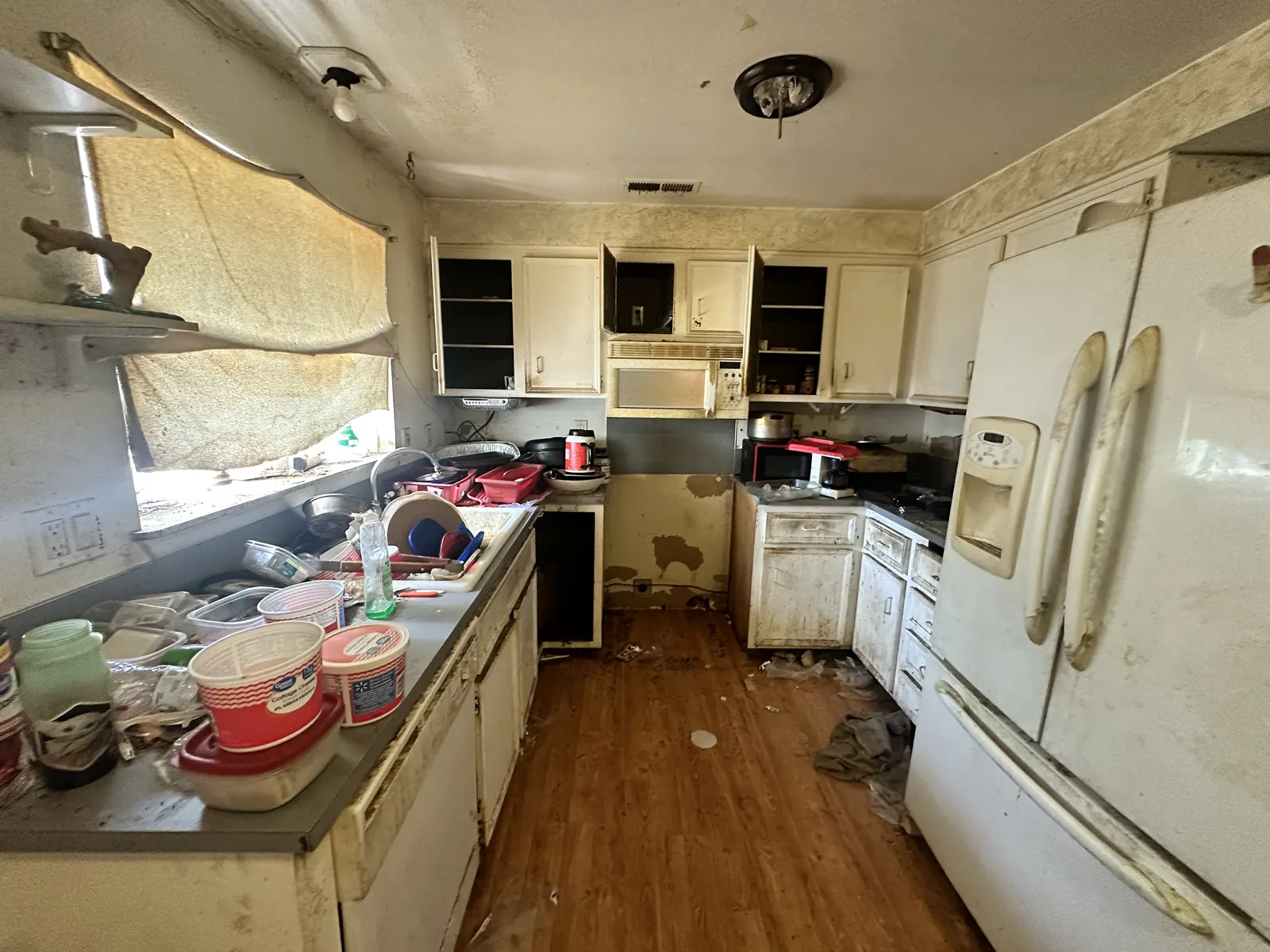
- Split the repairs into two groups. Cosmetic issues (paint, worn floors, an old kitchen) lower the price but rarely stop a sale. Lender-blocking issues (an active roof leak, no working heat, structural damage, missing kitchen or bathroom) can stop a financed buyer's loan, because FHA, VA and many conventional appraisals require the home to meet basic safety and soundness standards. Only the second group really forces your hand.
- Get a real repair quote, not a guess. Worried owners and cautious buyers both tend to guess, and guesses drift in whichever direction suits the person guessing. One written quote settles it.
- Do the math with the loan cost included. Repair cost plus loan interest and fees plus the extra weeks of holding costs while the work gets done is your true repair cost. Compare that with how much more the house sells for when it is fixed.
- Consider a credit instead of a repair. Offering a closing credit can be cheaper and faster than doing the work, but loan programs cap how much a seller can contribute, so check the limit for your buyer's loan type before promising one.
Example math, not a quote: a roof replacement quoted at $14,000, financed for a few months at a cost of about $600, plus six extra weeks of holding costs at $1,800 a month (about $2,700), puts the true cost near $17,300. If repaired houses on your street sell for $15,000 more than ones with bad roofs, borrowing to fix it loses money. If the gap is $30,000, it may be worth it.
What a fast sale actually costs: one house, three paths
Opinions about cash buyers range from "you will lose your shirt" to "it is the only sane option." The honest answer depends on the house. Here is the same example house run three ways, so you can see where the money goes. Every number below is an assumption for illustration. Swap in your own.
Example house: worth $300,000 once repaired, needs $20,000 of work, owner pays $2,000 a month to hold it.
| Fix, then list | List as-is | Cash buyer | |
|---|---|---|---|
| Sale price (example) | $300,000 | $272,000 | $215,000 |
| Repairs | -$20,000 | $0 | $0 |
| Commissions (example 5% total, negotiable) | -$15,000 | -$13,600 | $0 |
| Seller closing costs (example) | -$4,500 | -$4,100 | -$1,000 |
| Holding costs | -$8,000 (4 months) | -$5,000 (2.5 months) | -$1,000 (2 weeks) |
| Net before your payoff | $252,500 | $249,300 | $213,000 |
| Risk the deal falls apart | Moderate (loan, appraisal, inspection) | Moderate to high (inspection) | Low if the buyer shows proof of funds |
Three things stand out. First, fixing and listing beat listing as-is by only a few thousand dollars here, because the repairs and the extra months ate most of the higher price. Second, the cash path cost about $40,000 in this example: that is the price of speed, certainty and no work. Third, the cash price was not random. Many flippers start from a rule of thumb of roughly 70 percent of the repaired value minus repairs, which would be $190,000 on this house. Buyers who plan to rent the house out, or who have lower costs, can pay more, which is why getting more than one cash offer matters.
If your house needs little work, the cash discount is harder to justify. If it needs a lot, or every month costs you more than $2,000, the gap narrows quickly.
How to stop a buyer from renegotiating right before closing
Sellers who list often worry about this more than price: a buyer offers over asking, then uses the inspection to claw the price back days before closing, when starting over would be painful. You cannot remove that risk entirely, but you can shrink it.
- Get a pre-listing inspection and share it up front. Ask buyers to acknowledge in writing, ideally in the offer itself, that they reviewed the report. Defects they already knew about become a weak basis for a price cut.
- Disclose everything you know. State disclosure rules apply even when you sell as-is, and full disclosure takes away the surprise that renegotiation depends on.
- Keep the inspection period short. A buyer who gets a short inspection window has less time to shop for problems. Ask your agent what is normal in your state and push toward the short end.
- Ask for a meaningful earnest money deposit and check when it becomes non-refundable. A buyer with real money at risk is less likely to walk.
- Prefer a credit over repairs if you do agree to something. A small credit can hold a deal together without opening a new round of work and reinspection.
- Keep a backup. A second offer or a written cash offer in your pocket gives you leverage when a buyer tests you.
Reading a cash buyer's contract: seven clauses that decide whether it closes fast
Forum warnings about "we buy houses" companies usually trace back to the contract, not the offer price. A strong offer on paper can still mean months of waiting or a buyer who walks. Before you sign, find these clauses and know what each one does.
| Clause | What to look for | Why it matters |
|---|---|---|
| Buyer name, "and/or assigns" | Whether the buyer can transfer (assign) the contract to someone else | An assignable contract often means the buyer is a wholesaler who will resell your contract. That is legal in many states, but the closing then depends on finding a second buyer. |
| Inspection or due diligence period | How many days, and whether the buyer can cancel for any reason during it | A long, open-ended period works like a free option for the buyer. Short and specific is better for you. |
| Earnest money | The amount, who holds it, and when it becomes non-refundable | A tiny deposit that stays refundable until closing means the buyer can walk at no cost. |
| Contingencies | Financing, appraisal, permit or zoning contingencies | A "cash" buyer should not need a loan. A permit or rezoning contingency can stretch a closing by months. |
| Closing date | A firm date, not "on or before" with no limit | Speed is the reason you are taking a lower price. Get it in writing. |
| Price adjustments | Language that lets the price change after a walkthrough | A reasonable buyer prices the visible condition up front. Watch for room to cut the price late. |
| Closing costs and title company | Who pays which costs, and who chose the title or escrow company | Use a licensed title company or real estate attorney, and know your net before you sign. |
Also ask for proof of funds, such as a recent bank or lender letter, and look the company up with your state's business registry and the reviews it cannot control. If any clause confuses you, a one-hour review by a real estate attorney costs far less than a bad contract.
We hold ourselves to the same list. Who Buys Houses Fast buys some houses directly and, for others, works with a network of independent local cash buyers, which we explain on our company page. Either way you should know who the buyer is and see the terms in writing before you sign anything. Our FAQ covers how offers, fees and closing work.
See What a Cash Offer Looks Like for Your House
Get one as a floor, compare it with listing, and decide with real numbers. No obligation.
Cutting your price without making the listing look stale
Buyers notice price drops, and some read them as a sign something is wrong. That does not mean you should avoid cutting. It means you should cut the way that buys the most new attention.
- Decide the trigger before you list. For example: if there are no offers after two full weekends of showings, the price changes. Deciding in advance keeps you from drifting for months while the listing ages.
- Make one meaningful cut instead of several small ones. A series of small drops tells buyers to wait for the next one.
- Cut to cross a search boundary. Most buyers search in price bands. Dropping from $415,000 to $399,000 puts the house in front of everyone whose search stops at $400,000, while a cut to $409,000 reaches almost no one new.
- If the house came back on the market because a buyer's financing failed, have your agent say so in the notes other agents see. Buyers assume the worst about a relisted home unless someone tells them why.
Getting a free price opinion before you commit to anything
Sellers often ask whether an agent will run comparable sales without a signed listing. They will. A comparative market analysis is how agents compete for listings, and it costs you nothing.
- Talk to at least three agents and ask each for two numbers: the likely price as-is and the likely price after specific repairs. If three agents say $250,000 and one says $320,000, the outlier is usually trying to win the listing, not predicting the sale.
- Ask how many days their recent listings took to sell and how many needed price cuts.
- Read the listing agreement's length and cancellation terms. If time is short, ask for a short term or a right to cancel.
- Negotiate the commission. Rates are not set by law. Since industry rule changes took effect on August 17, 2024, offers of compensation to buyer agents are no longer published on MLS listings and buyers sign their own written agreements with their agents (NAR settlement FAQ). Ask each agent to explain, in writing, what you will pay and what you are paying for.
Selling on your own is a real option for some people, especially through a flat-fee MLS service that puts the house on the MLS without a full-service agent. You keep more of the price, but you take on pricing, showings, negotiation and paperwork, so it suits sellers with time and a contract they understand.
Selling fast after only a year or two? Check the tax rules first
Speed can carry a tax cost that none of the timelines above show. Gain on the sale of your main home can be excluded up to $250,000, or $500,000 for most married couples filing jointly, if you owned the home and lived in it for at least two of the five years before the sale (IRS Topic 701).
If you have not hit two years, you may still qualify for a partial exclusion when the main reason for selling is a job change, a health issue or an unforeseeable event. For work, the new job generally has to be at least 50 miles farther from the home than the old one (IRS Publication 523). If you are close to the two-year mark, waiting a few weeks can be worth more than any pricing tactic. Ask a tax professional before you set a closing date.
Inherited house: when "fast" depends on the court
If the owner has died, nobody can sign a deed until someone has the legal authority to sell. In probate that usually means a court has appointed an executor or administrator. If the house was in a living trust, the successor trustee can often act sooner. How long this takes varies a lot by state and county.
You can still move quickly in the meantime: get the house secured and insured, collect a payoff statement for any mortgage, clear out what the family wants, and gather offers so you are ready the day the authority is granted. A cash buyer used to estates can usually wait for the paperwork, and the time you spend lining things up is time you would have spent anyway.
The listing playbook in brief
If you list, these are the moves the top guides and agents agree on, in order of impact:
- Price against the competition, not your hopes. Use recent sold comparables in your neighborhood. Most buyer interest arrives in the first few weeks, so starting high and cutting later costs you the best traffic.
- Fix what blocks a loan, then the cheap visible things: burned-out bulbs, leaky faucets, broken hardware, fresh caulk.
- Clean, declutter and depersonalize. Store extra furniture and family photos off-site if you can, so rooms look larger in photos.
- Work on curb appeal. Mow, trim, pressure wash and freshen the front door, because the front photo is the first thing buyers see.
- Pay for professional photos, and add a floor plan or 3D tour if your agent offers one.
- Make showings easy, including evenings and short notice, and reply to every offer within a day.
- Time it if you can. Zillow's research has found that listings in the second half of May tended to sell for more nationally, though the best window varies by market.
So which path should you take?
- You have two or more months and the house is in decent shape: price it to sell with an agent, or on your own if you know your market. Collect a cash offer first if you want a floor.
- You have a few weeks and the house needs a lot of work: compare two or three cash offers line by line, using the contract checklist above.
- You are behind on payments: call your servicer and a housing counselor this week, then decide.
- Your realistic price is below your walk-away number: talk to your lender about options before you list.
If you want to see how a cash sale with us would work, read how it works, or browse buyers by state, such as Texas, Florida, Ohio and Pennsylvania. If listing turns out to be the better fit for your house, that is a fine outcome too. The goal is the sale that leaves you the most money and the least stress for your situation.
Quick Answers
What is the quickest way to sell a house?
A direct sale to a cash buyer or an iBuyer is the quickest, because there is no lender, no appraisal and no showings. The realistic floor is usually set by the title company clearing liens and preparing the deed, not by the buyer. Expect the fastest closings to take one to three weeks, and ask any buyer who promises less what happens if title work is not finished.
Can I sell my house fast if I owe more than it is worth?
Yes, but not on your own say. If the sale price will not cover your payoff and closing costs, you either bring the difference to closing in cash or ask your lender to approve a short sale, which adds the lender's review time. Get a written payoff statement first so you are working from the real number, not the balance on your monthly statement.
Do I have to make repairs before selling?
No. You can sell as-is with an agent or to a cash buyer. You still have to disclose known defects under your state's rules. Repairs make sense only when the price you gain is clearly larger than the repair cost plus the extra weeks of holding costs, or when the defect would block a buyer's loan.
What makes a house sell quickly on the open market?
Price relative to the competition matters more than anything else. A clean, well-photographed house priced at or slightly under comparable sales tends to draw offers in the first couple of weeks. Easy showings, quick replies to offers and an inspection report buyers can read up front all help too.
What is the hardest type of house to sell fast?
Houses that a typical buyer's lender will not finance: serious roof, foundation, fire or water damage, missing kitchens or bathrooms, or major unpermitted work. Those houses shrink to a cash buyer pool, which is why their sale price drops more than the repair bill alone would suggest.
Is a cash offer a good idea if I am not in a hurry?
Often not. If the house is in decent shape and you can wait a couple of months, listing usually nets more. A cash offer is still useful as a floor: it tells you the worst case, so you can decide how much time and work the difference is worth to you.